CRM for Botanical Gardens
How to pick a customer relationship management platform that actually understands members, donors, events, and the growing season.
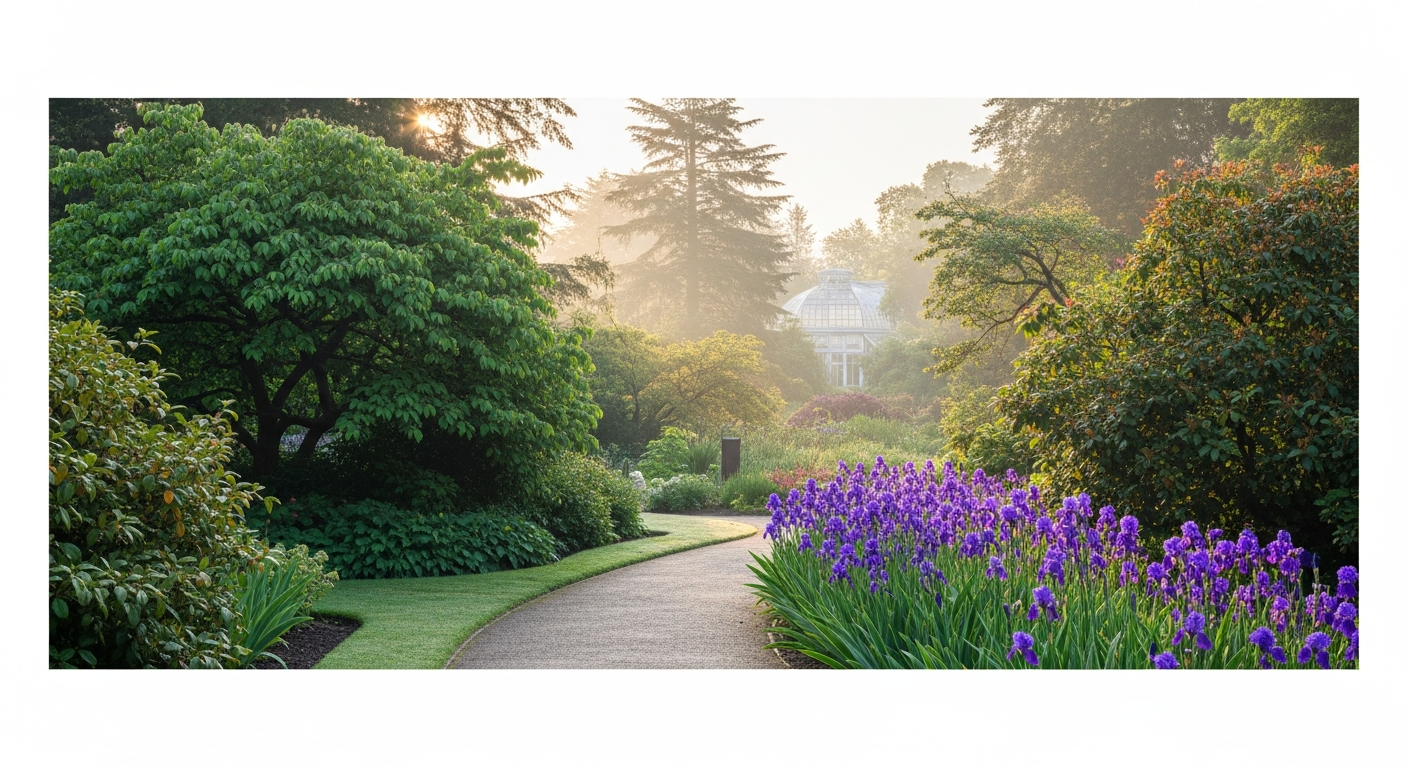
A CRM for botanical gardens is a single system for managing members, admission tickets, donors, volunteers, event registrations, and school programs, so every touchpoint (a membership renewal, a plant sale, a spring gala, a class field trip) rolls into the same visitor record. The best gardens use sector-fit software instead of a generic sales CRM.
Why botanical gardens need purpose-built CRM
Botanical gardens sit at an unusual intersection. You are a public attraction, a nonprofit fundraising organization, an event venue, an education provider, and often a research or conservation institution, all under one 501(c)(3). A CRM built for sales pipelines cannot see the person who bought a family membership last spring, brought their preschool on a field trip in October, and gave a year-end donation in December as the same person, because the vocabulary is wrong. A CRM built for botanical gardens starts from the visitor record and treats memberships, gifts, admissions, and program registrations as connected activities on a single household.
Key capabilities to look for in a botanical garden CRM
Five capabilities separate a real botanical garden CRM from a general-purpose sales or nonprofit tool. If a vendor cannot demo all five on real customer data, keep looking.
Household-based member records with automatic renewals
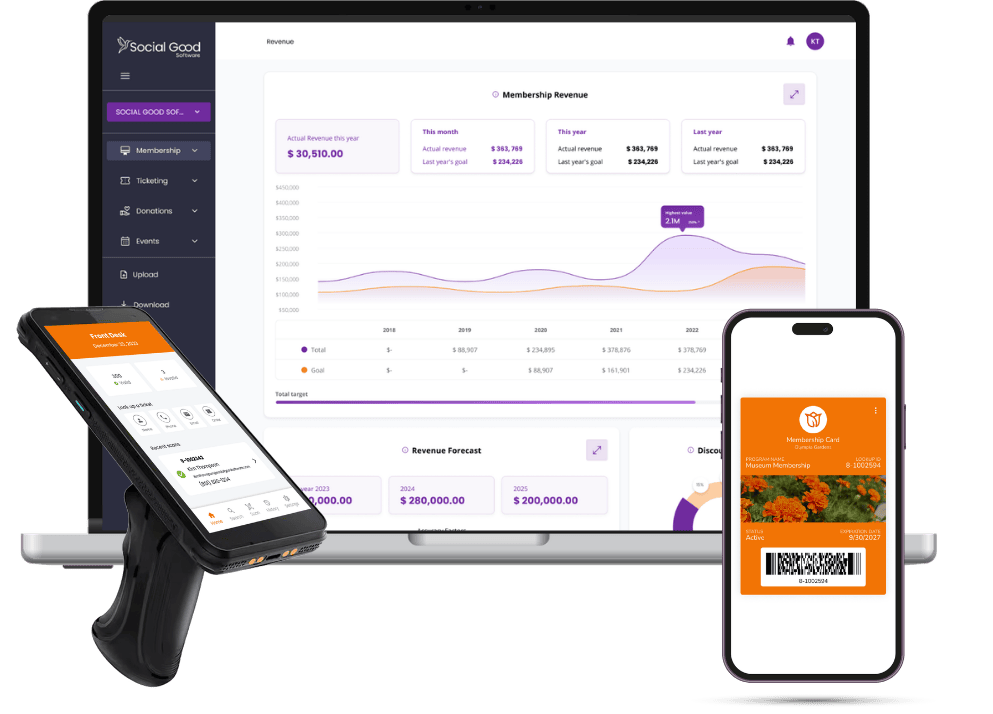
Botanical garden memberships almost always cover more than one person, and renewal timing is the biggest operational lever a garden has. The CRM should treat the membership as a shared household record with named cardholders, handle upgrades and downgrades mid-year, run auto-renew for members who opt in, and send reminder emails on a schedule the garden controls. It should never send two renewal notices to the same household because the spouses live at the same address.
Admissions and timed ticketing that talks to memberships
When a member arrives at the gate, the ticketing system should recognize them without a lookup: name, membership level, expiration, and any comps or benefits. When a non-member buys a ticket, the CRM should capture the email address and roll them into the next-visit conversion campaign. Timed entry, capacity caps for special exhibitions, and combo tickets for classes or events should share the same inventory.
Donor management, giving levels, and grant tracking
The garden’s annual fund, capital campaigns, planned giving, and restricted grants all need to sit in the same donor record as the family membership. Moves management, wealth screening integrations, and pledge schedules should be first-class, not a bolt-on. Grants from foundations for a specific plant collection or education program need restricted-fund tracking that your finance team can actually reconcile.
Event, class, and program registration
Plant sales, weddings, corporate rentals, adult education classes, camps, and school field trips all run through the same CRM. Registrations should apply member discounts automatically, enforce capacity limits, collect waivers when required, and email reminders. When a class fills, the system should keep a waitlist and pull from it automatically as spots open.
Volunteer scheduling and hours tracking
Volunteers are often the largest single group of constituents a garden has, and they overlap with members and donors constantly. The CRM should schedule shifts, track hours toward recognition thresholds, send confirmation and thank-you emails, and roll volunteer contribution up into the same profile the development team sees when they run a major-gift ask.
How SocialGood Software approaches CRM for botanical gardens
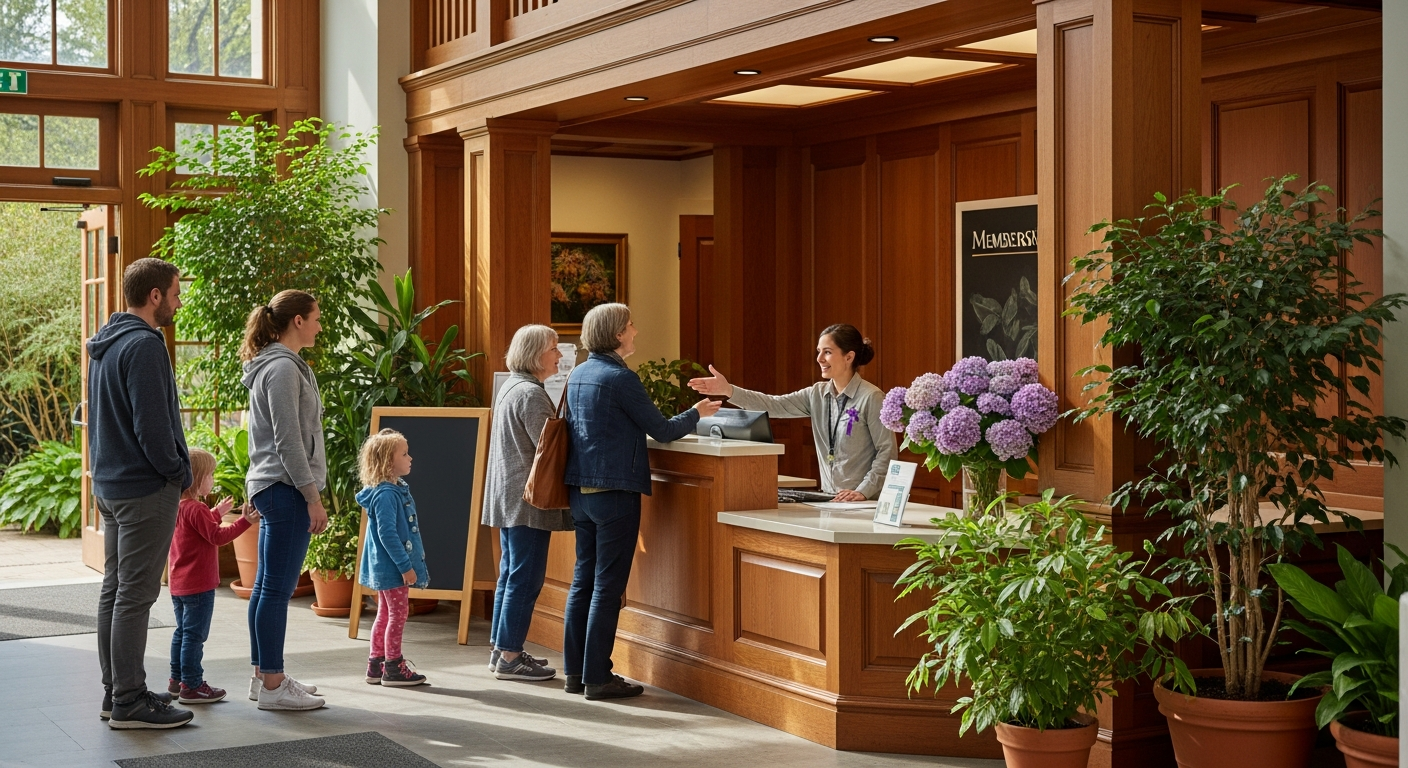
SocialGood Software was built specifically for cultural attractions like botanical gardens. We think of CRM as the spine of your organization, not a sidecar for the sales team. Memberships, admissions, donors, events, classes, and volunteers all share one visitor record. Your gate staff, membership office, development team, and education team see the same person from different angles. If you want to see it work for a botanical garden like yours, our team runs a live demo in about 30 minutes: explore the CRM module or book a walk-through.
Common pitfalls to avoid
The most common mistake is buying a generic CRM like Salesforce, HubSpot, or Zoho and trying to reshape it into a garden platform. It works for the first six months, then breaks the day you need member auto-renew with timed-entry admission or restricted-fund reporting. The second most common mistake is buying five different point solutions (one for tickets, one for donations, one for events, one for email, one for volunteers) and letting them drift out of sync. Every hour your staff spends reconciling reports is an hour they cannot spend on visitors, members, or plants.
Frequently asked questions
What is the best CRM for botanical gardens?
The best CRM for a botanical garden is one built for cultural attractions rather than for sales teams. It should combine membership, ticketing, donations, event and class registration, and volunteer management on a single visitor record. SocialGood Software, Altru, and a handful of other sector platforms are common choices; generic sales CRMs like Salesforce or HubSpot rarely hold up over the long term for a garden.
How much does CRM software for a botanical garden cost?
Expect $6,000 to $60,000 per year in software fees depending on visitor volume, transaction volume, and which modules you turn on. Larger gardens with significant fundraising, admissions, and event revenue usually spend on the higher end and get most of it back in reduced staff overhead and higher renewal rates.
Can we use Salesforce for our botanical garden?
Technically yes, but it is almost always the wrong answer. Salesforce is a general-purpose sales CRM. Making it work as a garden platform requires custom development for memberships, timed-entry ticketing, gift receipting, event registration, and volunteer management. Most gardens that go down that path end up re-platforming to a sector-fit CRM within two to three years.
Do we need a separate ticketing system if we have a CRM?
No, and ideally you should not. The moment your ticketing sits outside your CRM, your gate does not know who your members are, your marketing does not know who visited, and your annual fund does not know who already loves your garden. Look for platforms where admissions is a native module, not a plug-in.
How long does it take to switch garden CRMs?
A migration from a legacy platform typically takes 90 to 180 days end to end, with data cleanup being the slowest step. A well-scoped implementation with clean source data can go live in as little as 60 days. Plan the cutover for a shoulder season, not the week of your biggest event.
Will the CRM integrate with our email and website?
A modern garden CRM should push data to your email marketing platform (Mailchimp, Constant Contact, Campaign Monitor, and similar) and expose an API or widget for your website to sell memberships, tickets, and donations without redirecting visitors off-site. Ask for reference customers using the same email and web stack as you.