CRM for Arboretums
How to choose a customer relationship management platform that fits how arboretums actually work, from tree sponsorships to annual pass renewals.

A CRM for arboretums brings memberships, admissions, donors, tree sponsorships, and educational programs into a single record. The best fit for an arboretum is a sector-built platform for cultural attractions, not a general-purpose sales CRM.
Why arboretums need purpose-built CRM
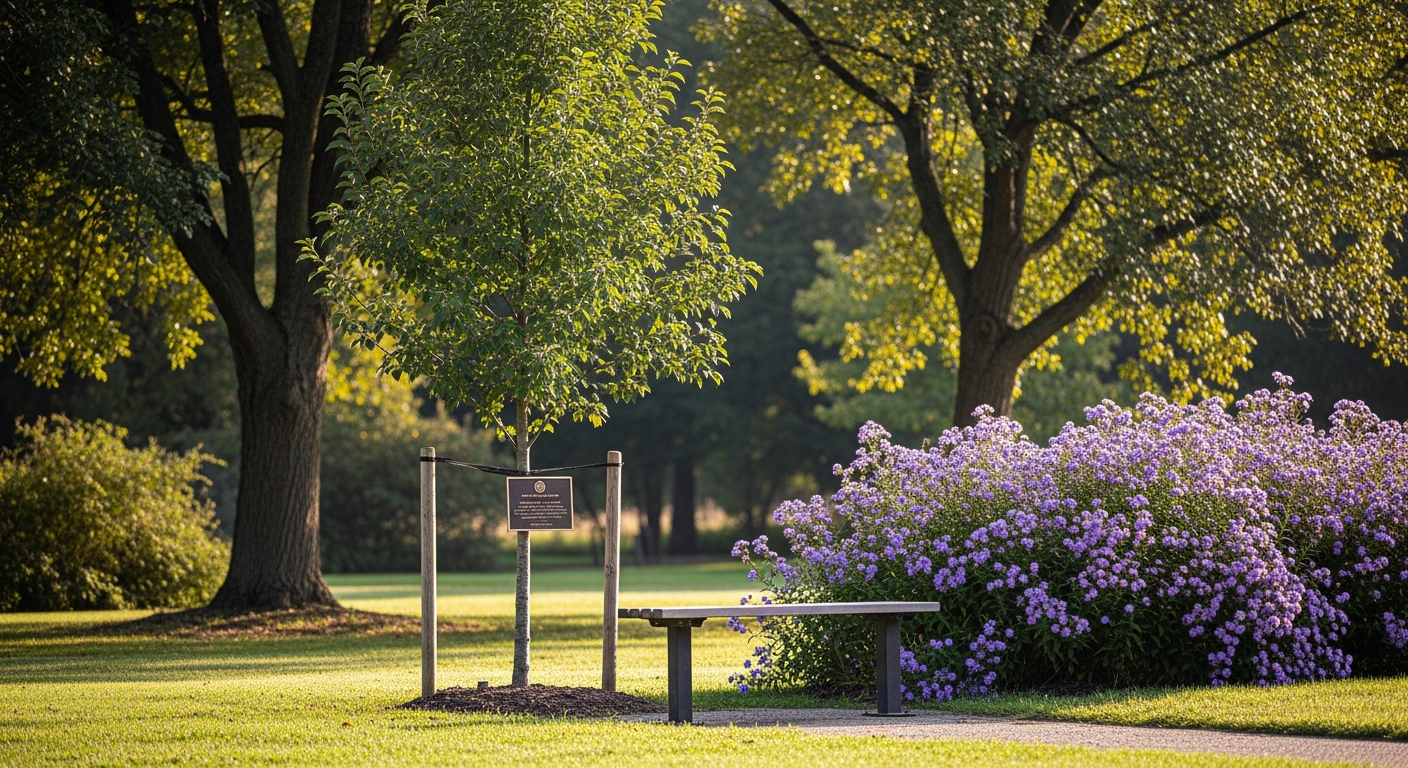
Arboretums are unusual in that a significant portion of giving is often tied to specific living assets: a memorial tree, a sponsored bench along a trail, a named grove. Those gifts have a lifetime; the tree lives for decades, and the family that sponsored it wants to revisit it, hear about it, and pass the connection to the next generation. A generic CRM cannot model that, and a spreadsheet-based system loses the thread within five years of staff turnover. A CRM built for arboretums maps giving to physical assets on the grounds, ties every gift to a household visitor record, and keeps the story alive across decades.
Key capabilities to look for in a arboretum CRM
Five capabilities separate a real arboretum CRM from a general-purpose sales or nonprofit tool. If a vendor cannot demo all five on real customer data, keep looking.
Tree, bench, and named-asset sponsorship tracking
Sponsorship gifts should be tied to specific physical objects on the grounds: a tree, a bench, a plaque, a section of a trail. The CRM should store the asset record (species, location, planting or install date), link it to the donor household, and support renewal, recognition, and stewardship communications tied to the anniversary of the gift.
Membership renewals and annual passes
Annual passes and memberships are the largest single recurring revenue line for most arboretums. The CRM should handle household-based membership, auto-renew for members who opt in, upgrade nudges, and a clean lapsed-member re-engagement flow.
Admissions and daily-use tracking
Even arboretums with free general admission benefit from knowing who is on the grounds. Scan-based check-in at the gate, timed capacity for popular events, combined member and non-member ticket options for classes and tours, all should sit in the same system.
Donor management for major, planned, and grant giving
Endowment gifts, planned gifts, foundation grants for collections care, and corporate sponsorships for signature events all need to sit in the same donor record as memberships and sponsorships. Restricted-fund tracking should reconcile to your finance system.
Education, tours, and volunteer programs
School groups, docent-led tours, adult classes, certificate programs, and volunteer stewards all belong on the constituent record. The system should manage registrations, waitlists, waivers, and hours tracking without spinning up a separate database.
How SocialGood Software approaches CRM for arboretums
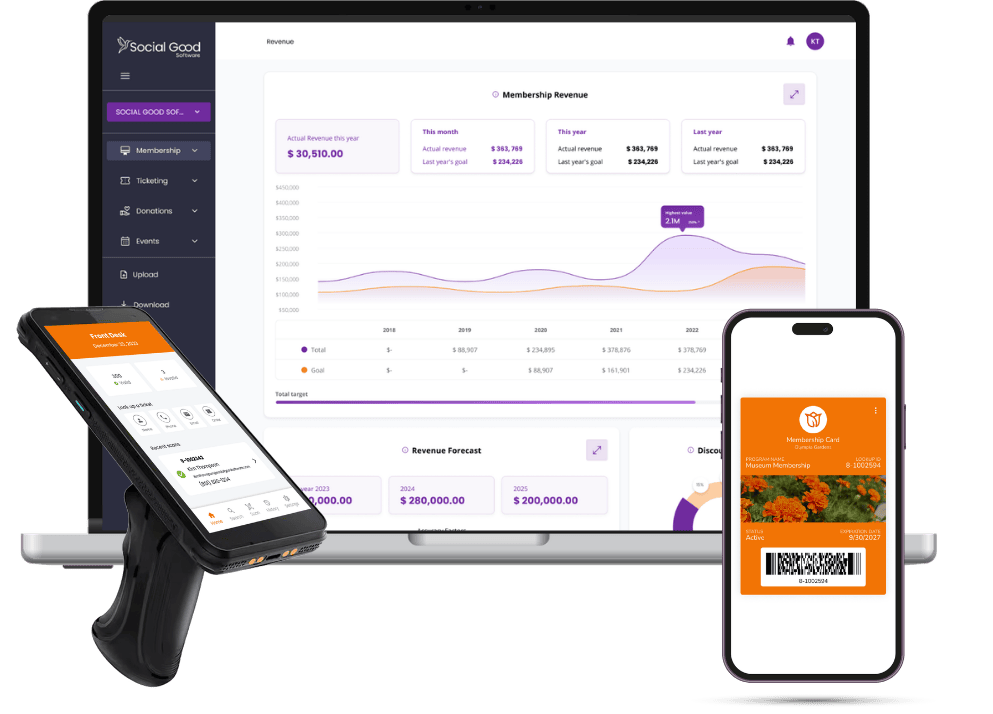
SocialGood Software treats an arboretum the way an arboretum director does: as a living collection you steward for the long term, with a community of members, donors, sponsors, and volunteers who share the mission. Every gift, sponsorship, and visit rolls into the same household record. If you want to see it work for a arboretum like yours, our team runs a live demo in about 30 minutes: explore the CRM module or book a walk-through.
Common pitfalls to avoid
The two mistakes we see most often: first, running memorial and tribute gifts in a spreadsheet because the CRM cannot model living assets. That works until the person who maintains the spreadsheet leaves, and then the story of who sponsored what is genuinely lost. Second, keeping education registrations in a separate tool because the CRM does not handle classes well. Now the education coordinator is a silo, no one on the development team can see who took a certificate program, and the arboretum misses obvious cultivation opportunities.
Frequently asked questions
What is the best CRM for an arboretum?
The best CRM for an arboretum is one designed for cultural attractions and living collections, with first-class support for memberships, tree and asset sponsorships, donations, and event registration on a single household record. Sector-built platforms like SocialGood Software or Altru are common choices; general-purpose CRMs almost always require heavy customization.
How do we track tree sponsorships in a CRM?
The CRM should store the sponsored asset (species, location, install date) as its own record linked to the donor household, and support renewals, stewardship communications, and reporting by collection area. Anything less than that ends up in a spreadsheet that goes stale.
How much does an arboretum CRM cost?
Most arboretums spend $8,000 to $50,000 per year on CRM software, depending on constituent count, transaction volume, and modules. The larger an arboretum’s fundraising and events operation, the more the sector-fit CRM pays for itself in reduced reconciliation and higher renewal rates.
Can we run our arboretum on a general nonprofit CRM?
A general nonprofit CRM (Bloomerang, DonorPerfect, Neon) is a step up from a spreadsheet, but it does not natively handle admissions, timed ticketing, class registration, or living-asset sponsorships. If any of those are significant operations for you, a cultural-attraction CRM will fit better.
How long does an arboretum CRM migration take?
Ninety to one hundred eighty days is typical, with data cleanup as the pacing item. Sponsored-asset records almost always need manual review because most legacy systems do not model them cleanly.
What about integrations with our website and email?
A good CRM exposes an API and drop-in widgets for your website (memberships, donations, event registrations, tree sponsorships) and pushes clean contact data to your email marketing platform. Ask prospective vendors for reference arboretums using the same stack you use.